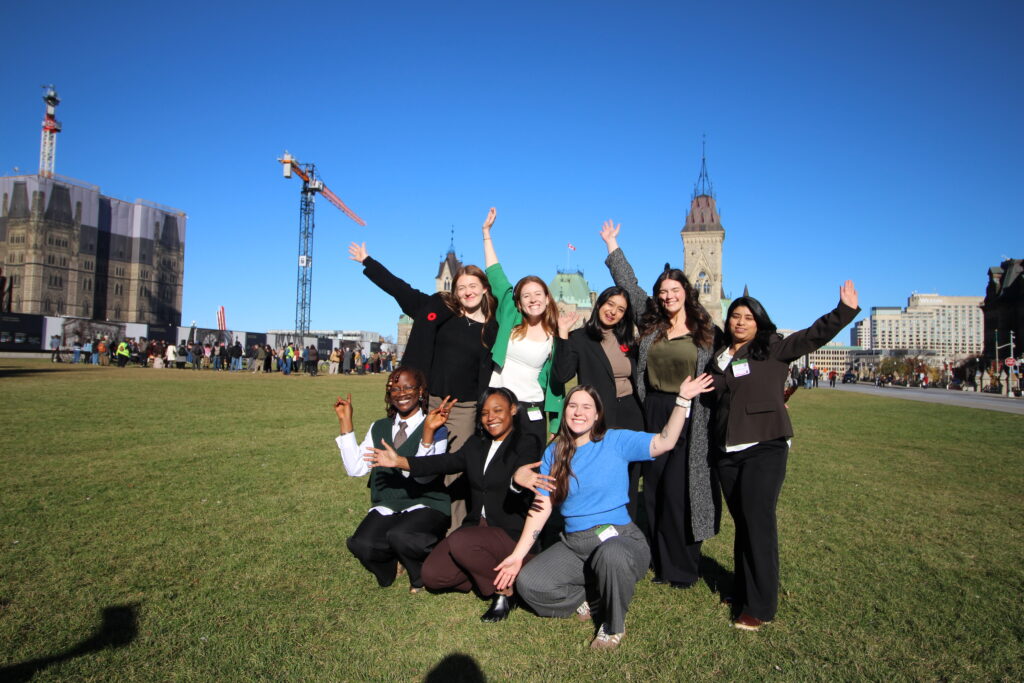
A crisp fall morning greeted eight young leaders as they made their way up Parliament Hill, united by a shared commitment to ending gender-based violence.
Representing YWCAs across Canada, they spent six months participating in workshops, mentorship and hands-on learning as part of the inaugural cohort of YWCA Canada’s Young Feminists Advocacy Fellowship. Launched this year, the fellowship gave participants the tools and confidence to bring their advocacy directly to federal decision-makers.
The fellowship equips young women and gender diverse youth with the tools to influence policy and create change in their communities. Participants learn about government relations, strategic communications, community organizing and effective advocacy. They also build connections with mentors and fellow advocates across the YWCA movement.
For these eight fellows, the final day meant bringing those skills directly to federal decision-makers, including the Honourable Rechie Valdez, Minister of Women and Gender Equality, Karina Gould, Liberal MP for Waterloo, and Senator Kim Pate.
Their message was clear: ending gender-based violence requires sustained investment in prevention and the wraparound supports survivors need to rebuild their lives.
“Invest in gender-based violence prevention and stop violence before it even starts,” said Jemima Maycock of YWCA Banff.
Victoria Slipp, formerly with YWCA Halifax, emphasized the need to go beyond emergency response.
“It’s not enough to respond after an incident of violence happens. We need to invest in education and programming and prevention supports for survivors everywhere.”
The fellows also highlighted the importance of services such as safe housing, child care, financial assistance and employment opportunities. These supports help survivors move beyond immediate crisis, regain economic independence and build long-term stability. Prevention, they argued, must go hand in hand with meaningful, sustained support for those experiencing violence.
For Eboni Douglas-Blaize of YWCA Kitchener-Waterloo, the fellowship offered practical lessons in engaging decision-makers while staying grounded in feminist values.
“I learned about government relations and how to speak to the government while staying true to our values and also understanding their interests,” she said.
The fellows’ advocacy reflects what thise fellowship set out to do: equip young people not only to understand the systems shaping their lives, but to engage with those systems and push for change.
As the fellowship comes to a close, eight young advocates return to their communities with new skills, stronger networks and the experience of bringing local realities into national conversations.
Investing in young women and gender diverse youth means recognizing their leadership today and creating opportunities for them to shape the policies and decisions that affect their lives and communities.
Their message from Parliament Hill is one worth carrying forward: ending gender-based violence takes sustained commitment to prevention and the supports people need to build safe, stable lives.